Source Modular E0 Wooden Kitchen Cabinet with Soft-Close Hinges for Apartments, Hotels, and Villas
Explore 30 listings for modular E0 wooden kitchen cabinet with soft-close hinges designed for apartments, hotels, and villas. Buyers can compare customization options, material grades, and hardware specifications from verified Chinese manufacturers.
Key considerations
Products List

Modern High Gloss Lacquer Finish with Soft Close Hinges Kitchen Cabinet
$1500.00 - $2000.00
MOQ: 1 Sets

Premium Solid Wood with Soft Close Hinges and Adjustable Shelves Kitchen Cabinet
$1200.00 - $1800.00
MOQ: 1 Sets

Modular High Gloss Lacquer Kitchen Cabinet for Modern Kitchen Cabinets System
$1699.00 - $2999.00
MOQ: 1 Sets

Kitchen Furniture Set Storage Modular Wooden Modern Cabinet with Accessories
$48.00 - $149.00
MOQ: 3 Square Meters

Luxury High Quality Modular Wooden Kitchen Modern Cabinet with Brand Hardware
$48.00 - $149.00
MOQ: 3 Square Meters


Factory Wholesale Modern Design Kitchen Cabinets Solid Wood Modular Kitchen Cabinet
$48.00 - $149.00
MOQ: 5 Square Meters

High End Solid Wood Kitchen Cabinet Luxury Modular Style Modern Kitchen Cabinet
$48.00 - $149.00
MOQ: 5 Square Meters

Modern Style Solid Wood Kitchen Cabinets High Quality Custom Modular Kitchen Cabinet
$48.00 - $119.00
MOQ: 5 Square Meters

High End Luxury Modular Modular Kitchen Cabinet Kitchen Furniture Wooden Cabinet
$25.00 - $39.00
MOQ: 9 Square Meters


Economy Modern High Quality Modular Kitchen Cabinet with Handles Design
$19.00 - $39.00
MOQ: 9 Square Meters

Factory Modular Classical Solid Wood Shaker Kitchen Cabinet Kitchen Furniture
$19.00 - $39.00
MOQ: 1 Meters

Wooden Kitchen Cabinet Solid Wood, Modern Kitchen Designs Small Kitchens, Modular
$110.00 - $188.00
MOQ: 49 Square Meters

Elegant Retro Kitchen Cabinet Minimalist Style Modular Kitchen Cabinet Ready to Assemble
$99.00 - $119.00
MOQ: 10 Meters
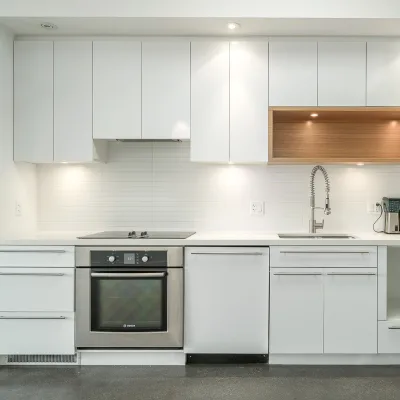


Custom Classic Modular Modern Design Practical Wholesale Kitchen Cabinet Set
$2000.00 - $3500.00
MOQ: 1 Sets

Chinese Style Luxury Design Wooden Kitchen Cabinet with Kitchen Pantry Cupboards
$103.00 - $154.00
MOQ: 1 Meters


Living Room Furniture Customized Kitchen Furniture Custom Shaker Modular Kitchen Cabinet
$160.00 - $180.00
MOQ: 1 Square Meters

OEM Factory Free Customized Kitchen Furniture Custom Shaker Modular Kitchen Cabinet
$160.00 - $180.00
MOQ: 1 Square Meters

Wood Kitchen Cabinets Design Home Modular Wall Mounted Wooden Kitchen Cabinet
$118.00 - $149.00
MOQ: 1 Meters


White High Gloss Lacquer L Shape Modular Small Kitchen Unit Cabinet Designs
$550.00 - $2000.00
MOQ: 1 Sets

Wholesale Modular Storage Cabinet Solid Wood Shaker Style Kitchen Cabinets Modern Design
$110.00 - $160.00
MOQ: 1 Square Meters

Modern Style Kitchen Design Black Matte Lacquer Cabinet Door Modular Cupboard Kitchen Cabinets
$110.00 - $160.00
MOQ: 1 Square Meters

Factory Hot Sale Modular Kitchen Cabinet Modern Cupboards for Kitchen
$500.00 - $1500.00
MOQ: 2 Square Meters

Comprehensive Sourcing Guide
Strategic Sourcing Guide for Modular E0 Wooden Kitchen Cabinets with Soft-Close Hinges
Understanding the Core Product Architecture
The modern kitchen cabinet market has shifted significantly toward modular systems that prioritize both aesthetic flexibility and functional durability. When sourcing a "modular E0 wooden kitchen cabinet with soft-close hinges," buyers are looking for a specific convergence of environmental standards, structural design, and hardware quality. The term "modular" implies a system where components can be assembled, reconfigured, or expanded without custom fabrication for every single unit, often utilizing a flat-pack design for efficient logistics. The "E0" designation refers to the formaldehyde emission standard, indicating a high level of environmental safety for indoor air quality. The inclusion of "soft-close hinges" is a critical hardware specification that distinguishes premium cabinetry from standard models, ensuring that doors and drawers close silently and gently, preventing slamming and extending the lifespan of the hardware.
Based on observed product attributes, these cabinets are frequently constructed using a combination of materials such as Plywood, MDF (Medium Density Fiberboard), and Particle Board. The choice of material often dictates the final structural integrity and moisture resistance. For instance, while MDF is common for door panels due to its smooth finish, Plywood is often preferred for the carcass to provide superior strength and resistance to warping. The product data indicates that door panel thickness typically ranges between 18mm and 21mm, while carcass thickness is available in 9mm, 16mm, or 18mm variations. This variance in thickness allows suppliers to offer different price points and durability levels, but the buyer must verify which specific thicknesses are included in their target quote to ensure the cabinet meets the intended load-bearing requirements.
Technical Specifications and Material Verification
When evaluating the technical specifications of these units, the material composition is the primary factor influencing performance. The supply chain data highlights that material options often include Plywood, MDF, Particle Board, and Solid Wood. A critical distinction for the buyer is the Board Grade, which is frequently listed as E0, E1, or ENF (Optional). The E0 standard represents a very low formaldehyde emission level, often lower than the E1 standard mandated in many regions. However, because standards can vary by region and manufacturer, the buyer must explicitly request test reports or certificates that confirm the E0 rating for the specific batch of materials being supplied. Relying solely on the marketing term "E0" without verification can lead to discrepancies in indoor air quality compliance.
The construction of the cabinet system also involves specific structural types, such as modular designs, flat packs, or built-in configurations. The product attributes suggest that these units are often designed as floor-to-ceiling systems, L-shaped layouts, or corner wardrobes, offering significant customization in size and layout. The door types available include sliding, hinged, glass, or open war designs, each requiring different hardware specifications. For the "soft-close" requirement, the hardware must include specific soft-close hinges and drawer slides. The observed data mentions hardware options ranging from premium brands like Blum to Chinese options, indicating a wide spectrum of quality. The buyer should not assume that all "soft-close" hardware is equivalent; the mechanism's durability and the smoothness of the closing action depend heavily on the specific manufacturer of the hardware components.
Compliance, Certification, and Environmental Standards
Compliance with international safety and environmental standards is non-negotiable for B2B procurement, especially for products destined for residential, hotel, or villa applications. The observed product data lists several certifications, including CE, ISOCCC, ISORoHS, and CCC. These certifications indicate that the manufacturer has met specific requirements regarding electrical safety (if applicable), environmental management, and product safety. The CE mark is particularly relevant for products entering the European market, while CCC is mandatory for products sold within China. The presence of ISORoHS suggests compliance with restrictions on hazardous substances, which is crucial for maintaining the integrity of the E0 material claim.
However, the mere presence of a certification label does not guarantee that every unit in a shipment is compliant. Buyers must verify that the certification applies to the specific product model and the specific production batch. For example, the data notes that certifications can vary between models, with some listing CE and ISOCCC while others list CE, ISORoHS, and CCC. This inconsistency underscores the need for a rigorous verification process where the buyer requests the actual certificate documents for the specific model number, such as RC-KC01 or KZ55, rather than accepting a generic certification statement. Additionally, the "Standard E1" or "E0/ENF" environmental ratings mentioned in the attributes must be backed by third-party testing results to ensure that the formaldehyde emissions are within the legally required limits for the destination market.
Cost Drivers and Pricing Dynamics
The pricing of modular E0 wooden kitchen cabinets is influenced by a complex array of factors, including material selection, hardware quality, customization level, and logistics. The observed price range in the market spans from $19 to $3,500, a wide disparity that reflects the difference between basic single units and complete, fully customized kitchen sets. The Minimum Order Quantity (MOQ) typically ranges from 1 set to 49 sets, offering flexibility for small-scale projects while accommodating larger commercial orders. The production time is generally cited as 45 working days, which is a critical factor in supply chain planning and project scheduling.
Several specific cost drivers must be analyzed during the procurement process. First, the choice of board grade significantly impacts the price; E0 and ENF grade boards are more expensive than standard E1 boards due to the stricter manufacturing controls required to reduce formaldehyde emissions. Second, the hardware selection is a major cost variable. While "Chinese Option" hardware may be cost-effective, premium brands like Blum command a higher price but offer superior longevity and performance. Third, the level of customization plays a pivotal role. Fully customized dimensions and compartment layouts, as indicated in the product attributes, require more engineering time and production adjustments, thereby increasing the unit cost compared to standard modular sizes. Finally, the packing method, whether flat packing with cartons and plywood crates or carton-foam-wooden box combinations, adds to the overall logistics cost, particularly for international shipping where volume and weight are critical.
Typical Applications and Design Flexibility
The versatility of modular E0 wooden kitchen cabinets makes them suitable for a diverse range of applications, from residential homes to large-scale commercial projects. The product attributes explicitly list applications in bedrooms, hotels, apartments, laundry rooms, and villas. This broad applicability stems from the modular design, which allows for easy adaptation to different spatial constraints and aesthetic requirements. For instance, the "Island Style" and "Modern" features observed in the product data cater to contemporary interior design trends, while the "Fixed" and "Unfixed" options provide flexibility in installation methods.
In residential settings, the emphasis is often on aesthetics and air quality, making the E0 rating and soft-close hardware essential features. In commercial applications such as hotels and apartments, durability and ease of maintenance become paramount. The ability to customize the cabinet system to be floor-to-ceiling or L-shaped allows designers to maximize storage space in compact areas, a common requirement in urban apartments. The "Modern" style and "White" color options, along with the availability of customized colors, ensure that these cabinets can blend seamlessly with various interior design schemes. Furthermore, the support for 3D renderings and 2D shop drawings provided by suppliers is invaluable for visualizing the final product before production begins, reducing the risk of errors in complex installations.
Supplier Evaluation and Quality Control Protocols
Selecting the right supplier requires a thorough evaluation of their manufacturing capabilities, quality control processes, and after-sales support. The product data indicates that suppliers offer customization services, including 3D renderings and 2D shop drawings, which demonstrates a level of technical competence. However, buyers must go beyond these surface-level offerings to assess the supplier's actual production capacity and quality assurance measures. The "Production Time" of 45 working days suggests a standardized production line, but buyers should verify if this timeline is consistent or if it varies based on order complexity.
Quality control should focus on the critical components of the cabinet: the board grade, the hardware, and the finishing process. Buyers should request samples to verify the E0 emission levels and the smoothness of the soft-close mechanism. The "Door Panel Finish" options, such as Melamine, PVC, Lacquer, or Wood Veneer, require different quality checks to ensure durability and resistance to wear and tear. Additionally, the "Hardware" section, which includes soft-close hinges and drawer slides, must be tested for longevity and reliability. The supplier's ability to provide a "Flat Packing with Carton & Plywood Crate" or similar robust packaging is also a key indicator of their commitment to protecting the product during transit. Buyers should also inquire about the supplier's track record in handling complaints and their willingness to provide replacement parts for any defective hardware.
Long-Term Procurement and Supply Chain Considerations
Long-term procurement success depends on establishing a reliable supply chain that can scale with the buyer's needs while maintaining consistent quality. The "Customized" nature of these cabinets means that each order may require unique engineering and production planning, making the relationship with the supplier crucial. Buyers should consider the supplier's ability to handle repeat orders and their capacity to maintain consistency in material quality and hardware performance over time. The "Standard E1" or "E0/ENF" environmental ratings must be maintained across all batches to ensure compliance with evolving regulations.
Furthermore, the logistics of shipping flat-pack cabinets require careful planning to minimize damage and reduce costs. The "Flat Packing" design is advantageous for reducing shipping volume, but the quality of the packaging materials, such as the carton, foam, and wooden box, must be sufficient to protect the cabinets during long-distance transit. Buyers should also consider the lead time variability, as the 45-day production time may be extended by unforeseen supply chain disruptions. Establishing clear communication channels and setting realistic expectations regarding delivery schedules and quality standards is essential for a successful long-term partnership. By focusing on these strategic elements, buyers can ensure that their investment in modular E0 wooden kitchen cabinets delivers value and performance for years to come.
FAQs
What certifications apply to these modular E0 wooden kitchen cabinets?
Certifications include CE, ISOCCC, ISORoHS, and CCC depending on the specific model. Buyers must verify that the certificate matches the exact product model number and batch, as certification labels vary between units like RC-KC01 and KZ55.
Which hardware options are available for soft-close functionality?
Hardware options range from premium brands like Blum to standard Chinese alternatives. All units feature soft-close hinges and drawer slides, but buyers should confirm the specific manufacturer to ensure durability and smooth operation.
How long is the production time for customized orders?
The standard production time is 45 working days for customized units. This timeline applies to fully customized dimensions and compartment layouts, though actual duration may vary based on order complexity and specific material selections.
Can I customize the board grade for better environmental safety?
Yes, board grades are available in E0, E1, or ENF options. While E0 offers very low formaldehyde emissions, buyers should request third-party test reports to verify the specific emission levels for the ordered batch.
What is the minimum order quantity for these kitchen cabinets?
The minimum order quantity starts at 1 set for most models. Some listings indicate an MOQ range of 1 to 49 sets, allowing flexibility for both small residential projects and larger commercial installations.
Which materials are used for the cabinet carcass and doors?
Carcass materials include plywood, particle board, or MDF, while doors use MDF or solid wood. Door panel thickness typically ranges from 18mm to 21mm, and carcass thickness is available in 9mm, 16mm, or 18mm.